
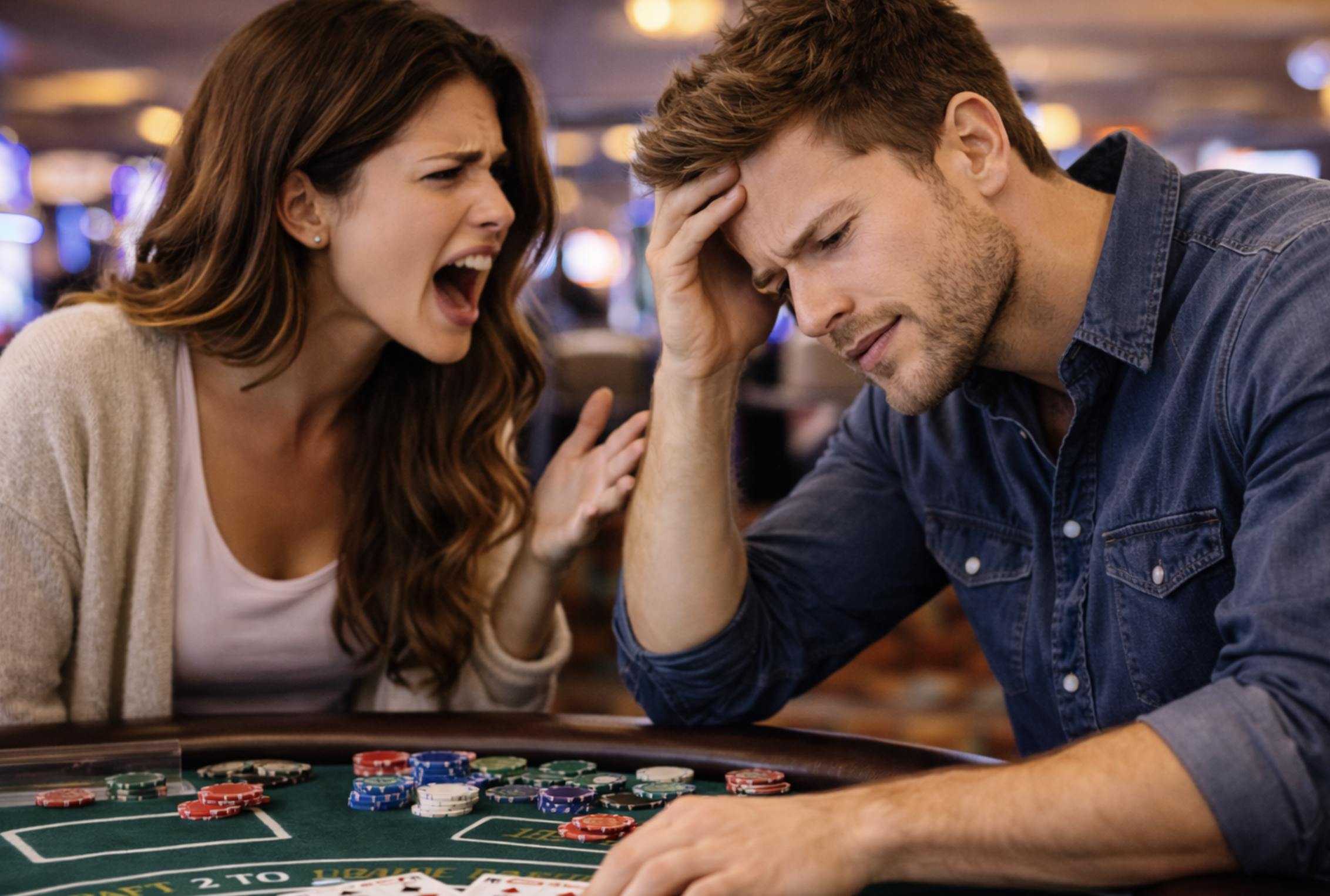

Gambling isn’t just a game—it’s a biological experience that impacts your brain in powerful ways. The rush, the anticipation, the thrill of “almost winning”… all of it connects directly to the reward system in your brain. That’s why gambling can feel exciting at first but quickly become addictive. Understanding what happens inside your brain helps explain why gambling is so difficult to walk away from once the cycle begins.
At the center of gambling addiction is dopamine, the brain chemical responsible for pleasure, excitement, motivation, and reward. Every time you place a bet—whether you win or lose—your brain releases dopamine. Unlike most natural rewards (food, exercise, social connection), gambling releases dopamine in unpredictable bursts. This unpredictability makes the dopamine surge even stronger, creating a craving for more.
One of the most dangerous aspects of gambling is the “near-miss” effect. When you almost win—a slot machine lining up two matching symbols, a sports bet missing by a single point—your brain reacts almost the same way it would if you actually won. Near-misses create a massive dopamine spike that tricks your brain into thinking you’re close to success, even when the odds haven’t changed. This fuels the urge to keep trying, hoping the next spin or next hand will be the one.
Gambling also impacts the brain’s learning circuits, especially the regions responsible for habit and decision-making. Over time, your brain associates gambling with pleasure, escape, and relief from stress. This rewiring strengthens the habit, making it harder to break. You may find yourself thinking about gambling even when you don’t want to, because your brain has learned to depend on those dopamine bursts for emotional comfort.
In addition, gambling affects the prefrontal cortex—the part of the brain that controls judgment, impulse control, and planning. When this part weakens, it becomes harder to make rational choices. You may chase losses, take bigger risks, or convince yourself “one more try” can fix everything. This shift isn’t a moral failure—it’s a biological change caused by repeated exposure to the rush of gambling.
Another important effect is tolerance. Just like with drugs or alcohol, your brain can become less sensitive to dopamine over time. That means you need bigger bets, longer sessions, or riskier behavior to feel the same excitement you once got from small wagers. This is how gambling spirals—your brain keeps demanding more stimulation, even when the consequences grow.
Stress, anxiety, and emotional pain also tie into the reward system. For many people, gambling becomes a way to escape heavy emotions or numb uncomfortable feelings. The momentary thrill becomes a coping mechanism. But afterward, guilt and loss only increase stress, making the brain crave another escape. It’s a loop that feels impossible to break alone.
The good news is that the brain can heal. When you step away from gambling and get support, your reward system starts to rebalance. Therapy, coping strategies, and healthy routines can help your brain relearn how to find pleasure in real life—relationships, hobbies, accomplishments, peace. The dopamine system becomes more stable, and the urge to gamble weakens with time and practice.
Gambling addiction is not about being irresponsible or reckless—it’s about how the brain reacts to uncertainty and reward. When you understand the science, the behavior makes more sense, and healing becomes easier to approach.
Life is short, and you deserve a brain that feels clear, calm, and fully in your control—not trapped by a cycle of highs and crashes. With the right support, recovery is absolutely possible.
Contact us online or call 844-525-2899 to speak with a member of our team today.