
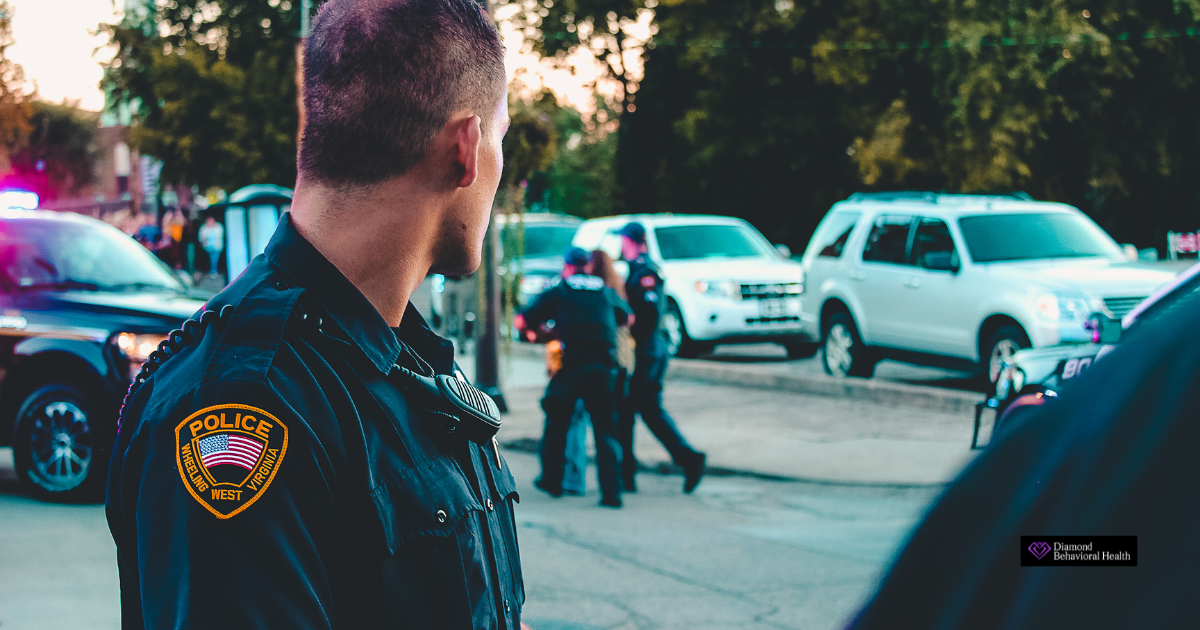
Policemen and women are trained to stay calm in chaos, to respond without hesitation, and to protect, even when it puts them in harm’s way. But who protects them when the emotional weight becomes too heavy to carry? The truth is that police mental health issues are far more common than many realize and often go unspoken until they reach a breaking point.
At Diamond Behavioral Health, we work with first responders across Florida who’ve silently carried these burdens for years. Our mission is to break the stigma, provide trauma-informed support, and help officers reconnect with themselves outside the uniform.
The Emotional Weight of the Job
Law enforcement is unlike any other profession. Officers are regularly exposed to violent incidents, emotional trauma, and life-or-death decisions. Over time, this type of sustained stress can take a serious toll on the human mind and body. Unfortunately, the culture within many departments still discourages vulnerability.
Police mental health issues often go untreated because officers fear judgment or believe they have to tough it out alone. But no one is immune to trauma, not even those trained to respond to it.
As symptoms accumulate, they often surface in subtle but damaging ways: short tempers, isolation, sleepless nights, or drinking more than usual. Without support, those behaviors can spiral into serious mental health conditions that impact not only the officer’s well-being but also their relationships and professional life.
The Data Behind the Reality
Recent findings have shed important light on this ongoing issue. According to the Bureau of Justice Assistance, many officers nationwide report symptoms of anxiety, depression, and PTSD in law enforcement settings, all directly linked to occupational trauma.¹
One 2024 study from the National Institutes of Health reported that nearly one in three officers experiences symptoms consistent with post-traumatic stress.² This includes hypervigilance, flashbacks, emotional numbness, and, in many cases, substance misuse as a coping mechanism.
These numbers confirm what many families already suspect: police mental health issues aren’t isolated incidents. They’re systemic and far more common than public discussions might suggest.
Recognizing the Signs Early
It’s easy for a person to dismiss mental health symptoms by convincing themselves it was just a bad day or telling themselves it’s simply part of the job, especially in law enforcement circles. But over time, these symptoms become patterns, and patterns become problems.
Signs of mental health in police officers can include:
- Persistent irritability or mood swings
- Difficulty concentrating or making decisions
- Withdrawing from loved ones or former social circles
- Increased reliance on alcohol, painkillers, or other substances
- Insomnia or chronic fatigue that impacts job performance
At Diamond Behavioral Health, we encourage early intervention. If you’re noticing these signs in a partner, family member, or colleague, it’s worth having a conversation. Many officers suffer in silence far longer than they need to.
Why Specialized Treatment Matters
Police work is unique. The trauma that comes with it requires care from professionals who understand that world. General therapy or a one-size-fits-all treatment plan often doesn’t address the full complexity of what officers are dealing with.
That’s why we offer a range of targeted support services at Diamond Behavioral Health that are designed specifically for first responders. From trauma disorder treatment to stress and anxiety care, our Florida-based programs meet officers where they are mentally and geographically.
We offer both outpatient and residential programs depending on the individual’s needs. These are designed to be discreet, compassionate, and focused on sustainable recovery. We also help with dual diagnoses, such as substance use disorders and unresolved trauma, through a full suite of mental health treatments that blend clinical expertise with real-world understanding.
Reducing Stigma, Promoting Support
There’s still work to be done when it comes to addressing police and mental health. The stigma surrounding mental illness in law enforcement remains one of the biggest barriers to care. But we are seeing progress, especially when officers are given safe, confidential spaces to talk through what they’re feeling.
Florida departments are slowly adopting peer support models, wellness check-ins, and better internal policies. But sometimes, internal resources aren’t enough. That’s where an external provider like Diamond Behavioral Health plays a critical role.
We also offer ongoing education and insight through our mental health blog, a resource for families, professionals, and law enforcement communities across the state.
You’re Not Alone, Help Is Available
Being in law enforcement means carrying the emotional weight of every call, every scene, and every outcome. But you don’t have to carry it forever. Police mental health issues are not a personal failure; they’re a reflection of a system that needs to change and a job that demands more than most can imagine.
If you’re in Florida and need help, Diamond Behavioral Health is here. We understand what you’ve been through, and we have the tools and compassion to help you through it. Whether you’re seeking help for yourself or someone you care about, our team offers confidential, first–responder–centered care that truly makes a difference.
Contact us online today or call us at 844-525-2899 to speak with someone who understands what you’re going through and how to help.
Sources
- Bureau of Justice Assistance. Police-Mental Health Collaboration Toolkit. Available from: https://bja.ojp.gov/program/pmhc
- National Institutes of Health. Mental Health Challenges Among First Responders: A Review. Published 2024. Available from: https://pmc.ncbi.nlm.nih.gov/articles/PMC10875161/