
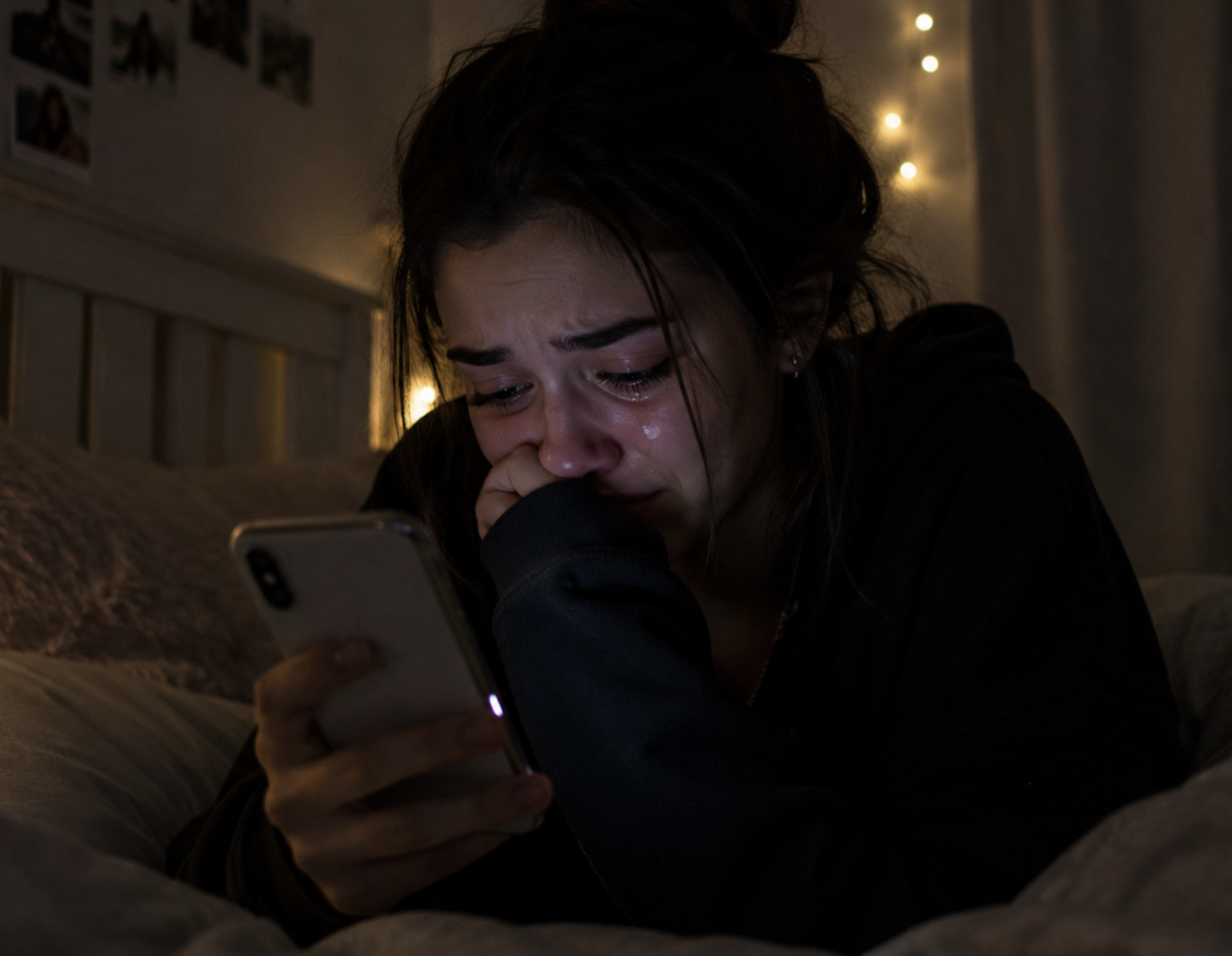
Comparing Yourself to Everyone Else
Social media can be entertaining and helpful, but spending too much time online can negatively affect mental health. Many people compare their real lives to the highlight reels they see online. Constantly seeing perfect vacations, expensive lifestyles, and edited photos can make people feel insecure or unhappy with themselves.
This phenomenon has a name in behavioral health research: social comparison theory. First introduced by psychologist Leon Festinger in 1954, the theory holds that human beings have a fundamental drive to evaluate their own worth by measuring themselves against others. Social media has taken this deeply human tendency and amplified it to an unprecedented scale. Where previous generations might have compared themselves to a handful of neighbors or coworkers, today’s social media users are exposed to thousands of curated lives simultaneously — each one filtered, edited, and optimized to project an image of success, beauty, and fulfillment that often bears little resemblance to lived reality.
The behavioral health consequences of chronic social comparison are well-documented. Studies published in peer-reviewed psychology and psychiatry journals have consistently linked heavy social media use with elevated rates of depression, anxiety, body dysmorphia, and diminished self-esteem — particularly among adolescents and young adults. For individuals already navigating underlying mental health conditions, the constant exposure to idealized imagery can significantly intensify symptoms and complicate the recovery process.
In Palm Beach County and throughout Florida, behavioral health professionals at Diamond Behavioral Health regularly work with clients for whom social media consumption has become a meaningful contributor to emotional distress. Recognizing the connection between online habits and mental health outcomes is an essential first step toward reclaiming balance and wellbeing.
The Pressure to Always Be “On”
A lot of people feel pressure to constantly respond to messages, post content, or keep up with trends. Over time, this can become mentally exhausting. Social media can also increase anxiety because people start tying their self-worth to likes, comments, and attention online.
The always-on culture of social media has fundamentally altered the way human beings relate to rest, solitude, and personal boundaries. Notifications are engineered by some of the most sophisticated behavioral psychologists and user experience designers in the world — designed explicitly to trigger dopamine responses that keep users engaged, returning, and dependent. The intermittent reinforcement model that underlies social media platforms is the same psychological mechanism that drives compulsive gambling behaviors. A like may arrive, or it may not. A comment may validate, or it may wound. The uncertainty itself becomes the engine of compulsive checking.
For individuals susceptible to anxiety disorders — a population that represents a significant portion of behavioral health clients in Palm Beach Gardens, Tallahassee, and across Florida — this cycle of anticipation and reward can become genuinely destabilizing. The nervous system learns to operate in a state of chronic low-grade vigilance, perpetually monitoring for social feedback and interpreting its absence as rejection or failure. Over months and years, this pattern erodes emotional resilience, disrupts healthy attachment, and can contribute to the development or exacerbation of generalized anxiety disorder, social anxiety disorder, and depression.
Crisis intervention specialists at behavioral health facilities throughout Florida increasingly report social media as a contributing factor in acute mental health crises — particularly among teenagers and young adults who have grown up with smartphones as a primary social infrastructure. Understanding the neurological and psychological mechanisms behind this pressure is not about assigning blame to technology. It is about equipping individuals with the awareness and behavioral tools needed to engage with social media on their own terms rather than the platform’s.
Signs Social Media May Be Hurting You
Some warning signs include:
- Feeling anxious after scrolling
- Comparing yourself to others constantly
- Trouble focusing in real life
- Losing sleep because of your phone
- Feeling emotionally drained after being online
Recognizing these signs early is critically important from a behavioral health standpoint. What begins as a minor pattern of discomfort can, without intervention, escalate into a full clinical presentation requiring professional support. The earlier an individual identifies that their relationship with social media is negatively impacting their emotional wellbeing, the sooner they can implement meaningful change — and the less likely the situation is to develop into a behavioral health crisis requiring more intensive intervention.
Sleep disruption deserves particular attention among these warning signs. The relationship between screen time and sleep quality is one of the most robustly supported findings in behavioral health research. Blue light emitted by phone and tablet screens suppresses melatonin production, disrupting the body’s natural circadian rhythm. But beyond the physiological component, the psychological stimulation of social media — the emotional content, the social comparisons, the unresolved notifications — activates the nervous system in ways that make the transition to restful sleep significantly more difficult. Chronic sleep deprivation is itself a powerful driver of anxiety, depression, irritability, and impaired cognitive function, creating a feedback loop that compounds over time.
Difficulty focusing is another symptom that warrants serious attention. The rapid-fire, algorithmically curated content environment of social media platforms actively trains the brain to expect constant novelty and stimulation. This fundamentally conflicts with the sustained attention required for meaningful work, deep conversation, creative thought, and emotional presence. Individuals who notice that their capacity for focus has diminished — that reading a full article, completing a task, or staying present in conversation has become increasingly difficult — may be experiencing the neurological effects of chronic social media overstimulation.
Taking breaks from social media can help people reconnect with real-life relationships and routines. These breaks, sometimes called digital detoxes in popular culture, are increasingly being recommended by behavioral health clinicians as a legitimate and effective component of mental health treatment planning.
The Connection Between Social Media and Behavioral Health Crises
The link between social media use and mental health crises is one of the most pressing public health conversations of our time. Research from institutions including the American Psychological Association has raised serious concerns about the role of social media in driving crisis-level mental health outcomes — particularly suicide ideation, self-harm, and eating disorder behaviors — especially among young people.
Cyberbullying represents one of the most acute crisis pathways associated with social media. Unlike traditional bullying, which was constrained by physical proximity and school hours, cyberbullying follows its targets into their homes, bedrooms, and every private moment. Victims of cyberbullying report significantly elevated rates of depression, anxiety, self-harm, and suicidal ideation compared to those who have not experienced online harassment. The permanence of digital content — the fact that humiliating posts, screenshots, and comments can circulate indefinitely — compounds the psychological injury in ways that have no historical precedent.
For parents, educators, and community members in Palm Beach County and the Tallahassee region, recognizing when a young person’s social media use has escalated to crisis territory is an urgent responsibility. Warning signs that a behavioral health crisis may be developing include dramatic changes in mood following phone use, withdrawal from in-person relationships in favor of exclusive online engagement, expressions of worthlessness tied to online feedback, and any indication of self-harm or suicidal thinking.
If you believe you or someone you love is experiencing a behavioral health crisis connected to social media use or any other cause, Diamond Behavioral Health provides immediate, compassionate crisis support at our Palm Beach Gardens and Tallahassee, Florida locations. You do not have to wait until things reach a breaking point to ask for help. Early intervention saves lives.
Finding Balance
Social media itself is not always the problem. The issue is usually balance. Spending time outside, exercising, hanging out with friends, and limiting screen time can improve mental well-being significantly. Muting toxic accounts and following positive content can also help create a healthier online environment.
From a behavioral health perspective, balance is not a passive state that happens naturally — it is an active practice that requires intentional habits, consistent boundaries, and periodic reassessment. Here are evidence-informed strategies that behavioral health clinicians recommend for developing a healthier relationship with social media:
Establish screen-free zones and times. Designate certain spaces in your home — particularly the bedroom — and certain times of day — particularly the hour before sleep and the first hour after waking — as screen-free. These boundaries protect the neurological and psychological processes most vulnerable to social media disruption.
Audit your following list with intention. Every account you follow is a recurring input into your psychological environment. Accounts that consistently trigger comparison, insecurity, or negative self-talk are not neutral — they are actively shaping your emotional landscape. Unfollowing or muting them is an act of self-care, not conflict.
Replace scrolling with embodied activities. Physical movement, time in nature, creative pursuits, and face-to-face social connection activate neurological reward systems in ways that social media mimics but cannot replicate. Exercise in particular has demonstrated antidepressant and anxiolytic effects comparable to medication in multiple clinical studies.
Practice intentional use rather than habitual use. There is a meaningful difference between opening a social media app with a specific purpose and closing it when that purpose is fulfilled, versus mindlessly scrolling in response to boredom, loneliness, or anxiety. Developing awareness of which mode you are operating in is the first step toward reclaiming agency over your digital habits.
Seek community in real life. One of the deepest ironies of the social media era is that platforms designed to foster connection have in many ways deepened loneliness. Prioritizing in-person community — whether through friendships, faith communities, support groups, hobby clubs, or volunteer work — provides a quality of belonging that no algorithm can manufacture.
When to Seek Behavioral Health Support
Lifestyle adjustments and digital boundaries are valuable tools, but they are not always sufficient when social media use has contributed to a significant mental health condition. If anxiety, depression, disordered eating, self-harm, or crisis-level distress has developed — whether related to social media or otherwise — professional behavioral health intervention is appropriate, effective, and available.
Diamond Behavioral Health offers a comprehensive continuum of care for individuals throughout Palm Beach County and the Tallahassee area who are navigating mental health and substance use challenges. Our licensed clinicians provide individualized assessment and treatment planning, drawing on evidence-based modalities including Cognitive Behavioral Therapy, Dialectical Behavior Therapy, trauma-informed care, and psychiatric medication management when clinically indicated.
Whether you are experiencing the early signs of social media-related anxiety or you are in the midst of a full behavioral health crisis, our team is equipped and committed to supporting your recovery. Reaching out is not an overreaction — it is the most important step you can take for yourself or someone you love.
Final Thoughts
Protecting your mental health sometimes means disconnecting from the internet and reconnecting with real life. Balance is key. In a world that profits from your attention and engineers your engagement, choosing to prioritize your own emotional wellbeing is a radical and necessary act of self-determination.
Social media will continue to evolve. The platforms will become more immersive, the algorithms more sophisticated, the content more stimulating. The individuals who navigate this landscape with the greatest resilience will be those who have invested in their behavioral health — who have built the self-awareness, coping skills, and support systems needed to engage with technology on their own terms.
At Diamond Behavioral Health, we are here to support that journey. From our Palm Beach Gardens facility in the heart of Palm Beach County to our Tallahassee location in Florida’s capital, our team stands ready to help individuals and families build the emotional foundations that allow them to live fully — online and off.
FAQs
How does social media affect behavioral health? Social media can contribute to anxiety, depression, disordered eating, sleep disruption, and diminished self-esteem through mechanisms including social comparison, cyberbullying, dopamine-driven compulsive use, and chronic overstimulation. For individuals with pre-existing behavioral health conditions, heavy social media use can exacerbate symptoms and complicate recovery.
Can social media use lead to a behavioral health crisis? Yes. Research links heavy or negative social media experiences — including cyberbullying, social comparison, and exposure to harmful content — with increased rates of crisis-level mental health outcomes including suicidal ideation and self-harm, particularly among adolescents and young adults. If you or someone you love is in crisis, please seek immediate behavioral health support.
What are signs social media may be hurting you? Anxiety after scrolling, persistent social comparison, difficulty focusing, sleep disruption, and emotional exhaustion after online engagement are all warning signs that your social media use may be negatively affecting your mental health.
Where can I find behavioral health support in Palm Beach County or Tallahassee, FL?Diamond Behavioral Health provides compassionate, evidence-based behavioral health care at our Palm Beach Gardens and Tallahassee, Florida locations. Contact our team today to learn more about our programs and begin your path to recovery.
Contact us online or call 844-525-2899 to speak with a member of our team today.