
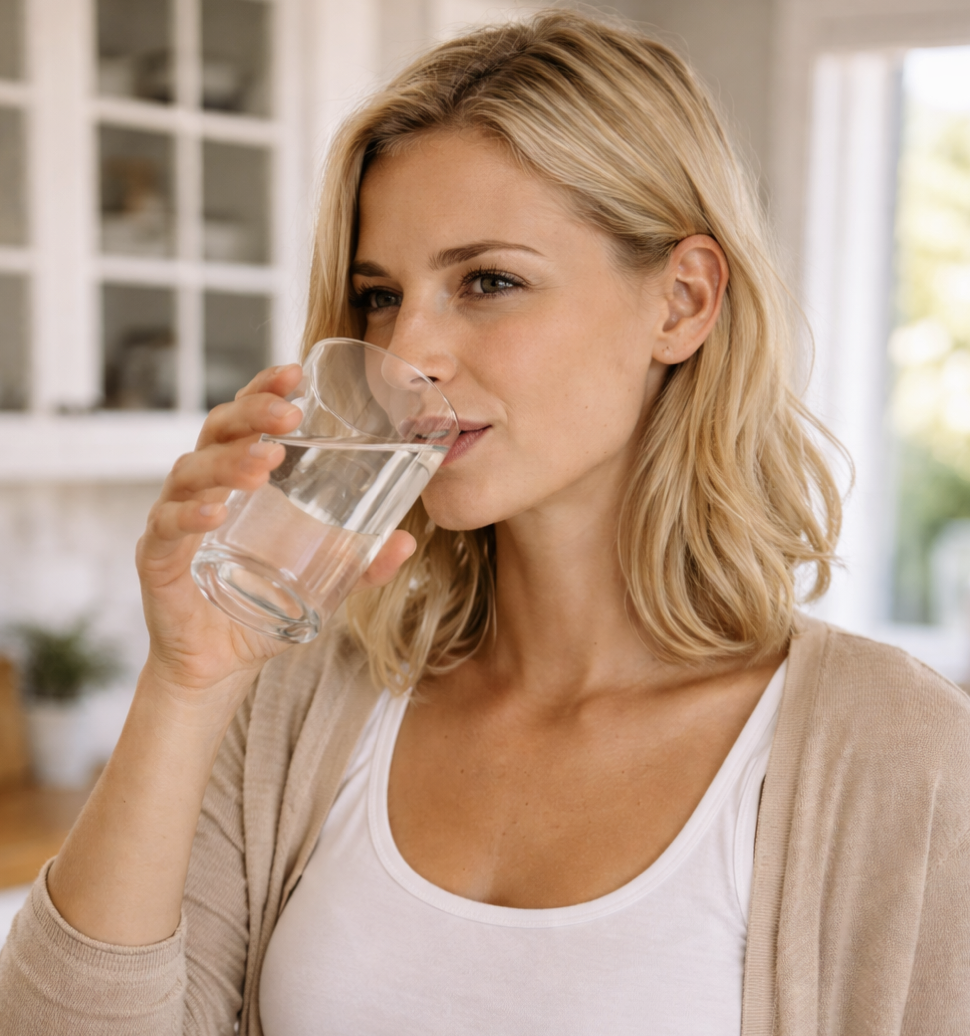
Most conversations about anxiety focus on therapy, medication, sleep, and stress management. Rarely does the conversation start with a glass of water. But an expanding body of research suggests that hydration — something most people manage inconsistently at best — has a more direct and measurable impact on anxiety than is commonly understood.
This is not a claim that water cures anxiety. It does not. But the science connecting fluid intake to the body’s stress response is specific, mechanistic, and increasingly hard to overlook.
What Happens in the Brain When You Are Dehydrated
The brain is roughly 75 percent water, and it is exquisitely sensitive to fluid shifts. Even mild dehydration — levels that may not register as obvious thirst — can alter neurological function in ways that directly affect mood and stress response.
Here is where the physiology becomes relevant. When fluid levels drop, the body responds by increasing production of cortisol, the primary stress hormone. As cortisol rises, production of the neurotransmitters associated with mood and calm — serotonin, dopamine, and oxytocin — declines. The result is a neurochemical environment that is, by definition, more prone to anxiety, irritability, and emotional dysregulation.
That cortisol spike does more than shift mood chemistry. It also activates the body’s fight-or-flight response, the same physiological state triggered by perceived threat or danger. The physical symptoms that follow — increased heart rate, faster breathing, muscle tension, sweating — are nearly identical to the physical symptoms of an anxiety episode. For someone already managing anxiety, the biological signal sent by dehydration can either initiate or significantly amplify the experience.
Dehydration also depletes amino acid availability in the brain, further compromising the synthesis of the neurotransmitters needed for emotional stability. And because chronic stress impairs adrenal function, which in turn reduces production of aldosterone — a hormone that helps regulate fluid and electrolyte balance — individuals under sustained psychological stress may be caught in a reinforcing cycle: stress drives dehydration, and dehydration drives more stress.
What the Research Shows
A 2025 study published in the Journal of Applied Physiology by researchers at Liverpool John Moores University found that people who habitually drank less than the recommended daily fluid intake had cortisol levels more than 50 percent higher during stressful situations compared to those who were adequately hydrated. Critically, the under-hydrated participants did not feel thirstier — the dehydration was not registering consciously — but it was still triggering measurable biological strain.
A large-scale study of more than 3,000 adults found that people who drank more water had a lower risk of both anxiety and depression than those who drank less, with anxiety elevated among lower water consumers. A separate study of Spanish university students found that more than 90 percent of those with anxiety levels above the 95th percentile showed a negative water balance — meaning they were consistently taking in less fluid than their bodies were losing.
Research from the Cleveland Clinic summarizing multiple studies concluded that low fluid levels contribute to hormonal changes, cognitive impairment, and disrupted sleep, all of which compound anxiety and mood instability over time.
None of these studies establish simple causation — anxiety itself can suppress thirst and disrupt drinking patterns, creating a bidirectional relationship. But the consistency of findings across different populations and study designs points to a relationship that is real and physiologically grounded.
The Electrolyte Factor
Hydration is not only about water volume. The effectiveness of fluid intake depends significantly on electrolyte balance — specifically sodium, potassium, and magnesium.
Magnesium deserves particular attention in the context of anxiety. It plays a central role in regulating the nervous system and modulating the HPA axis, the hormonal system that controls the stress response. Low magnesium intake has been associated with heightened anxiety and increased cortisol reactivity. Because magnesium is lost through sweat and exertion, individuals who are physically active or under prolonged stress may be chronically low without realizing it.
Sodium and potassium work together to regulate fluid movement across cell membranes and support neural signaling. Imbalances in these electrolytes — which can result from excessive plain water intake without adequate mineral replacement, or from heavy sweating — can cause symptoms including heart palpitations, muscle weakness, and light-headedness, all of which have the capacity to trigger or worsen anxiety in susceptible individuals.
Proper hydration, in other words, means maintaining both fluid volume and electrolyte equilibrium. Plain water, consumed in large amounts without attention to mineral intake, does not always accomplish both.
Signs That Dehydration May Be Contributing to Your Anxiety
The challenge with mild-to-moderate dehydration is that it does not always present as thirst, particularly in adults who have adapted to chronically low fluid intake. Signals worth paying attention to include persistent fatigue that is not explained by sleep, difficulty concentrating, low-grade irritability that feels disproportionate to circumstances, mild headaches, dry mouth, and dark or infrequent urination.
When these physical markers overlap with periods of heightened anxiety, the connection is worth examining. Urine color remains one of the most accessible indicators of hydration status: pale yellow suggests adequate hydration, while amber or dark yellow indicates the body is conserving fluid.
What Adequate Hydration Actually Looks Like
General recommendations suggest that most adults need somewhere between 2.7 and 3.7 liters of total fluid daily, though individual needs vary considerably based on body weight, activity level, climate, and diet. Food accounts for roughly 20 percent of daily fluid intake, meaning the remainder needs to come from beverages.
A few practical considerations:
Hydration needs to be consistent throughout the day rather than front- or back-loaded. The body cannot effectively store large volumes of water consumed all at once, and spacing intake across waking hours supports steadier physiological function.
Caffeinated beverages — coffee, energy drinks, certain teas — have a mild diuretic effect and do not fully replace water intake. They can contribute to fluid intake in moderate amounts, but they are not a substitute for water and electrolyte-balanced fluids.
Exercise, heat, stress, and illness all increase fluid and electrolyte demands. On days involving any of these variables, baseline intake recommendations need to be adjusted upward.
For individuals managing anxiety, tracking hydration as a daily habit alongside other wellness practices — rather than treating it as an afterthought — is a low-cost, high-access intervention with meaningful physiological support behind it.
The Bigger Picture
Anxiety is a complex condition shaped by genetics, environment, life experience, and brain chemistry. Hydration is not a treatment, and it does not replace clinical care for those who need it. What it is, however, is a foundational physiological variable that affects the neurochemical and hormonal systems directly implicated in anxiety — and one that most people manage poorly without recognizing the consequences.
The stress hormone spike triggered by dehydration, the downstream suppression of mood-regulating neurotransmitters, the near-identical physical symptoms of dehydration and anxiety — these are not marginal findings. They describe a genuine biological relationship between how much water someone drinks and how capable their body is of maintaining equilibrium under pressure.
For anyone living with anxiety, or supporting someone who is, it is worth asking a simple question before reaching for more complex interventions: Is this person consistently, adequately hydrated? The answer is more often no than most people expect.
Contact us online or call 844-525-2899 to speak with a member of our team today.
This article is intended for informational purposes only and does not constitute medical advice. Individuals experiencing anxiety or other mental health concerns should consult a qualified healthcare provider.