
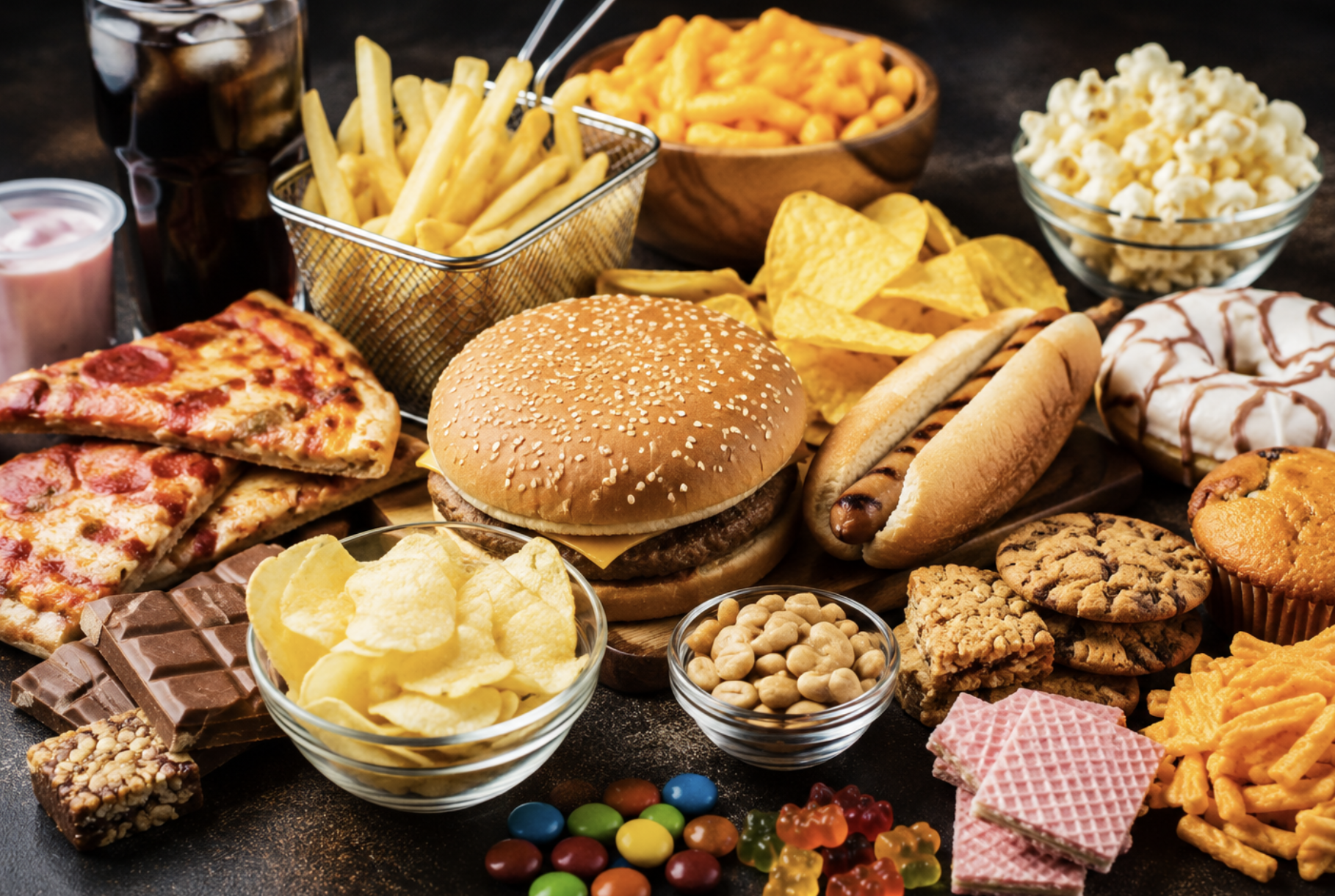
The conversation around ultra-processed foods has shifted dramatically. What began as a nutritional concern focused on obesity, diabetes, and cardiovascular risk has expanded into something far more unsettling — a growing body of evidence suggesting that the way modern food is manufactured may be directly affecting how the brain functions, how moods are regulated, and how vulnerable people are to depression, anxiety, and cognitive decline.
This is one of the fastest-moving areas in nutritional science right now, and the findings are proving difficult to dismiss.
What Are Ultra-Processed Foods?
Not all processed food is the same. The NOVA classification system, now widely used in nutrition research, distinguishes between minimally processed foods (frozen vegetables, canned legumes, plain yogurt), conventionally processed foods (cheese, cured meats, simple breads), and ultra-processed foods — a category defined not just by processing level but by formulation.
Ultra-processed foods (UPFs) are industrial products assembled largely from substances extracted or derived from foods — refined starches, hydrogenated fats, added sugars, protein isolates — combined with additives that have no culinary equivalent: emulsifiers, artificial colorants, flavor enhancers, stabilizers, and preservatives designed to extend shelf life and engineer palatability. Packaged snacks, fast food, sugary cereals, flavored drinks, processed deli meats, and most ready-to-eat meals fall into this category.
In the United States, UPFs now account for roughly 60 percent of average daily caloric intake in adults and an even higher proportion in adolescents. That figure has been climbing for decades.
The Mental Health Data: What Studies Are Finding
The research connecting UPF consumption to mental health outcomes has reached a volume and consistency that is hard to set aside.
A large umbrella review published in The BMJ in 2024 analyzed 45 pooled meta-analyses examining the health consequences of ultra-processed food consumption. Among the most significant findings: higher UPF intake was associated with a 53 percent increased risk of common mental disorder symptoms — a category that includes depression and anxiety — and for every 10 percent increase in ultra-processed food intake as a proportion of daily calories, the risk of depression rose by approximately 11 percent.
A study co-authored by researchers at Harvard Medical School and published in JAMA Network Open found that higher UPF consumption was associated with a 50 percent increased risk of developing depression.
A 2026 systematic review published in the journal Nutrients, examining the relationship between UPF consumption and mental health in children and adolescents, found that across most studies reviewed, high UPF intake was positively associated with anxiety, depression, irritability, and behavioral dysregulation. A separate 2026 analysis published in JAMA Network Open found that for every 10 percent increase in calories from ultra-processed foods, children scored meaningfully higher on standardized checklists for emotional and behavioral problems.
The findings are not limited to clinical populations. They appear consistently across demographic groups, age ranges, and geographic contexts — which is part of what makes them compelling to researchers.
How Ultra-Processed Foods Affect the Brain
The statistical associations are striking, but the more important question is mechanism — how does eating these foods actually alter brain function and mood? Researchers have identified several overlapping pathways.
The Gut-Brain Axis
The gut and brain are in constant bidirectional communication through a network of neural, hormonal, and immune pathways collectively called the gut-brain axis. Central to this system is the gut microbiome — the diverse ecosystem of bacteria that plays essential roles in digestion, immune regulation, and neurotransmitter production.
Beneficial gut bacteria, including Lactobacillus and Bifidobacterium species, synthesize GABA and serotonin — neurotransmitters directly involved in mood regulation and anxiety response. They also help modulate cortisol levels and maintain the integrity of the intestinal lining.
Ultra-processed foods, which are high in refined ingredients, additives, and artificial emulsifiers while being almost entirely devoid of fiber and polyphenols, disrupt this microbial ecosystem. They deplete beneficial bacteria, reduce the production of short-chain fatty acids that support gut lining integrity, and create conditions for gut dysbiosis — a state of microbial imbalance that research has increasingly linked to neuroinflammation, mood disorders, and heightened anxiety.
Neuroinflammation
Chronic systemic inflammation is now recognized as a key biological feature of depression, present in a significant proportion of patients with major depressive disorder. A 2025 review published in Frontiers in Public Health found that UPF-induced gut disruption triggers neuroinflammation and oxidative stress — both of which are implicated in the development of mood disorders. The chemical additives present in ultra-processed foods appear to act directly and indirectly on the gut microbiome in ways that propagate inflammatory signals to the brain.
High dietary fat and added sugar, both hallmarks of ultra-processed products, also impair the integrity of the blood-brain barrier — the protective layer that regulates what crosses from the bloodstream into brain tissue. When that barrier is compromised, inflammatory molecules gain broader access to neural tissue, with downstream effects on cognitive function and emotional regulation.
Nutrient Displacement
Ultra-processed foods do not just introduce harmful inputs — they also crowd out the ones the brain needs. High-UPF diets are consistently associated with low intake of vitamins A, C, D, E, the B-complex vitamins, and minerals including magnesium, iron, selenium, and potassium. These micronutrients are directly involved in neurotransmitter synthesis, HPA axis regulation, and the management of oxidative stress in the brain. Their absence creates a nutritional deficit that compounds the chemical and inflammatory damage from the foods themselves.
Magnesium, which plays a central role in regulating the stress response and supporting serotonin production, is among the most commonly displaced nutrients in high-UPF diets — and low magnesium status has been independently associated with elevated anxiety and depression risk.
Brain Structure
Perhaps the most striking findings concern structural brain changes. Longitudinal data from the Raine Study linked high-UPF dietary patterns to a measurable reduction in hippocampal volume — the brain region central to memory consolidation and emotional regulation. A 2025 analysis from the Framingham study and a complementary 2024 meta-analysis of nine cohorts found a 25 to 35 percent excess risk of all-cause dementia in those with the highest UPF consumption. These are not functional or mood-level findings — they describe physical changes to the architecture of the brain over time.
The Addiction Dimension
A pattern that continues to draw scientific attention is the degree to which ultra-processed foods appear to engage the brain’s reward circuitry in ways that parallel addictive substances. The combination of refined carbohydrates, added fats, salt, and engineered flavor profiles is designed to maximize palatability and repeat consumption — and neuroimaging research suggests that these foods activate dopamine pathways in ways that healthy, minimally processed foods do not.
Research in Turkish adults published in Food Science and Nutrition found that individuals consuming more ultra-processed food self-reported significantly more severe food addiction symptoms. The implications for mental health are compounded by the fact that the same dopamine dysregulation implicated in food addiction overlaps with the neurological profiles associated with anxiety and depression.
What This Means in Practice
The science does not support the conclusion that eliminating ultra-processed foods will resolve a mental health condition. Depression, anxiety, and related disorders are complex, multifactorial, and require clinical assessment and treatment. What the research does support — with increasing force — is that dietary patterns heavy in ultra-processed foods create a biological environment that is measurably less capable of maintaining emotional equilibrium, managing stress, and supporting the neurotransmitter systems involved in mood regulation.
The gut microbiome, the inflammatory pathways, the nutritional status, the brain’s reward architecture — ultra-processed foods operate on all of these simultaneously, and not in ways that are easily reversed by a single supplement or isolated intervention. The cumulative effect of years of high-UPF dietary patterns represents a genuine and increasingly well-documented risk factor for mental health decline.
For individuals and families thinking about mental wellness from a whole-body perspective, the evidence now makes it reasonable — and arguably necessary — to treat dietary patterns as a foundational variable alongside sleep, exercise, stress management, and social connection.
A Note on Where the Research Is Heading
One of the most significant recent developments is the shift from association to mechanism. Early studies established correlation. The current wave of research is mapping the biological pathways through which ultra-processed foods alter gut health, drive inflammation, displace nutrients, and restructure the brain — and that mechanistic clarity is what gives the mental health findings their weight.
Further long-term randomized trials are still needed, and researchers are careful to acknowledge the complexity of untangling dietary effects from broader lifestyle factors. But the direction of the evidence — across population studies, systematic reviews, and now mechanistic research — is consistent enough that the scientific community is no longer debating whether the relationship exists. The conversation has moved to how significant it is, and what to do about it.
Contact us online or call 844-525-2899 to speak with a member of our team today.
This article is intended for informational purposes only and does not constitute medical advice. Individuals should consult a qualified healthcare provider regarding dietary changes or mental health concerns.