
The Impact of Blue Light and Screen Time on Mental Health
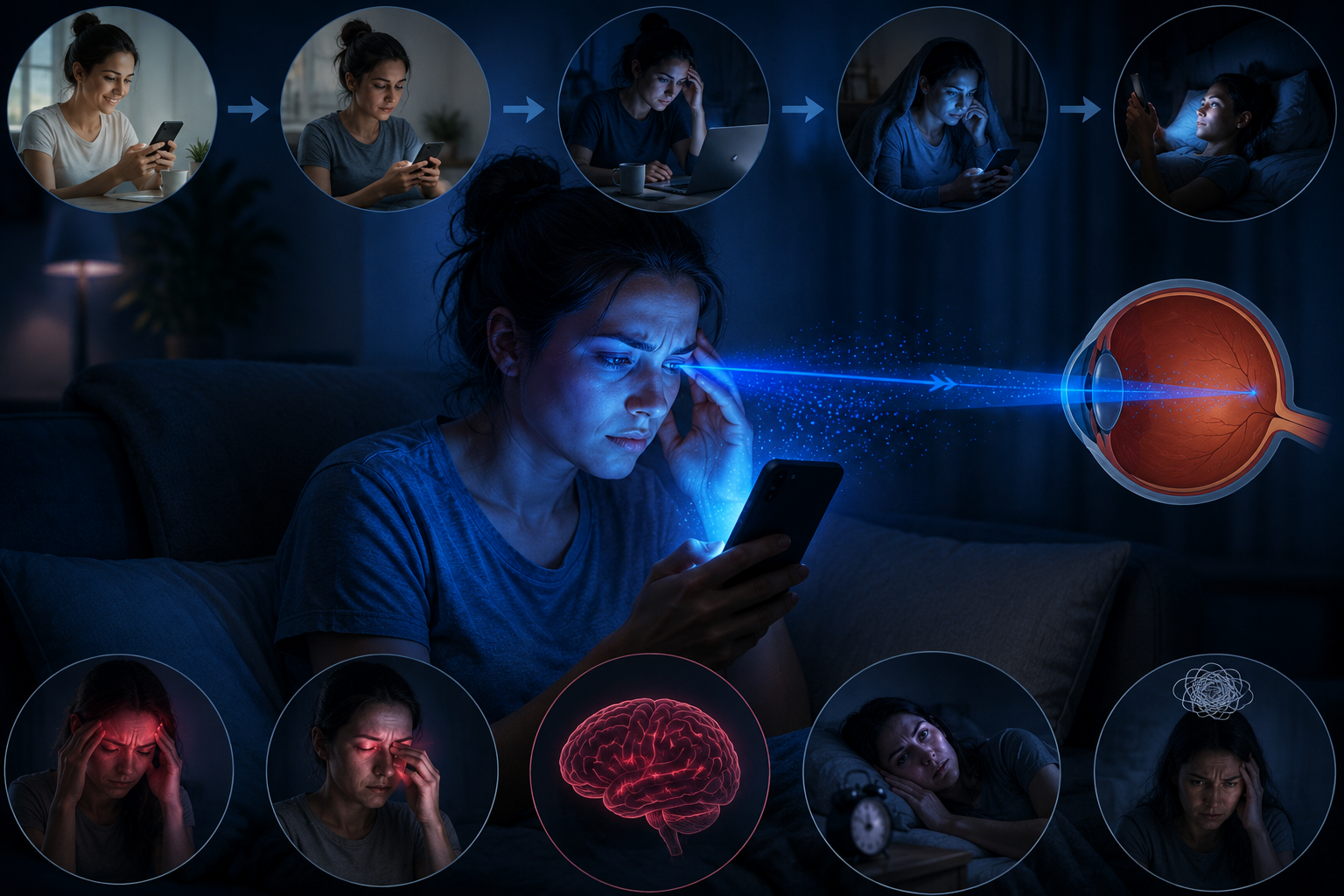
In today’s digital world, screens are nearly impossible to avoid. From smartphones and tablets to laptops and televisions, the average person spends several hours each day looking at a screen. While technology has brought countless benefits, growing research suggests that excessive screen time and prolonged exposure to blue light may have significant effects on mental health.
Many people notice that after spending long periods scrolling through social media, watching videos, or working on a computer, they feel mentally exhausted, anxious, irritable, or have trouble sleeping. Although screens themselves are not inherently harmful, how and when they are used can influence mood, stress levels, sleep quality, and overall psychological well-being.
Understanding the relationship between blue light, screen time, and mental health can help individuals develop healthier habits and protect their emotional wellness in an increasingly connected world.
What Is Blue Light?
Blue light is a type of visible light naturally emitted by the sun. It plays an important role in regulating the body’s circadian rhythm, which is the internal clock that controls sleep and wake cycles.
During daylight hours, blue light exposure helps promote alertness, attention, and energy. However, blue light is also emitted by many electronic devices, including:
- Smartphones
- Tablets
- Computers
- Televisions
- LED lighting
Unlike sunlight, screen exposure often continues late into the evening, which can interfere with the body’s natural signals for rest and recovery.
How Blue Light Affects Sleep
One of the most well-established concerns surrounding blue light is its impact on sleep.
As evening approaches, the brain naturally increases production of melatonin, a hormone that helps prepare the body for sleep. Blue light exposure can suppress melatonin production, making it more difficult to feel tired at night.
When individuals spend hours scrolling on their phones or watching screens before bed, their brains may receive mixed signals about whether it is time to sleep or stay awake.
Poor sleep can lead to:
- Increased anxiety
- Irritability
- Difficulty concentrating
- Low energy
- Mood swings
- Higher stress levels
- Increased risk of depression
Because sleep and mental health are so closely connected, disruptions caused by excessive nighttime screen use can have a significant impact on emotional well-being.
The Connection Between Screen Time and Anxiety
Many people report feeling more anxious after spending extended periods online. While there are several factors involved, excessive screen use can contribute to anxiety in multiple ways.
Constant notifications, messages, emails, and news updates keep the brain in a state of heightened alertness. Instead of allowing the mind to rest, individuals may feel pressure to remain continuously connected and responsive.
Social media can further amplify anxiety by encouraging comparison with others. Seeing carefully curated highlights of other people’s lives may create unrealistic expectations and feelings of inadequacy.
Over time, this constant stimulation can make it difficult for the brain to fully relax, contributing to chronic stress and anxiety symptoms.
Social Media and Emotional Well-Being
Research suggests that passive screen use—such as endlessly scrolling through social media without meaningful interaction—may be associated with lower mood and increased feelings of loneliness.
Some common emotional effects include:
- Comparing oneself to others
- Fear of missing out (FOMO)
- Reduced self-esteem
- Increased social anxiety
- Negative body image
- Feelings of isolation
This does not mean social media is always harmful. Positive online interactions, supportive communities, and meaningful conversations can provide valuable social connection. However, excessive passive consumption often has different psychological effects than active engagement.
The Impact on Depression Symptoms
Excessive screen time has also been linked to higher rates of depressive symptoms, particularly among adolescents and young adults.
Several factors may contribute to this relationship:
- Reduced face-to-face interaction
- Disrupted sleep patterns
- Increased social comparison
- Sedentary behavior
- Less time spent outdoors
- Reduced participation in hobbies and activities
When screen use replaces healthy activities such as exercise, socializing, or pursuing personal interests, individuals may experience lower overall life satisfaction and emotional fulfillment.
While screens alone do not cause depression, excessive use may contribute to factors that increase vulnerability to depressive symptoms.
Digital Overload and Mental Fatigue
The human brain was not designed to process a constant stream of information twenty-four hours a day.
Modern technology creates endless opportunities for stimulation through:
- Social media feeds
- Text messages
- Email notifications
- Breaking news alerts
- Streaming content
- Online discussions
This continuous input can overwhelm cognitive resources and contribute to mental fatigue.
Many people describe feeling mentally drained even after spending hours doing relatively passive activities online. The brain remains active and engaged, processing information without receiving adequate periods of rest.
Mental fatigue can reduce productivity, impair concentration, and increase feelings of stress and emotional exhaustion.
Screen Time and Stress Levels
Technology can sometimes blur the boundaries between work, school, and personal life.
Many individuals find themselves checking emails late at night, responding to messages during vacations, or scrolling through social media during moments that would otherwise provide relaxation.
This constant accessibility can make it difficult to disconnect and recover from daily stressors.
Without intentional breaks, the nervous system may remain activated for extended periods, contributing to chronic stress and burnout.
Creating healthy boundaries around technology use can help restore balance and support emotional recovery.
The Benefits of Reducing Screen Exposure
Reducing screen time does not require eliminating technology entirely. Small changes can often lead to noticeable improvements in mental health.
Potential benefits include:
- Improved sleep quality
- Reduced anxiety
- Better concentration
- Enhanced mood
- Increased productivity
- More meaningful social interactions
- Lower stress levels
Many people report feeling calmer and more present after taking regular breaks from screens throughout the day.
Even short periods away from technology can provide valuable opportunities for mental recovery.
Strategies for Healthier Screen Habits
Developing a healthier relationship with technology starts with awareness and intentionality.
Helpful strategies may include:
Create Screen-Free Time Before Bed
Try avoiding phones, tablets, and computers for at least one hour before sleep. This can support natural melatonin production and improve sleep quality.
Turn Off Unnecessary Notifications
Reducing constant alerts can help decrease stress and prevent frequent distractions.
Set Daily Screen Limits
Many devices now include screen time tracking tools that allow users to monitor and manage their usage.
Spend More Time Outdoors
Natural sunlight helps regulate circadian rhythms and provides a healthy counterbalance to indoor screen exposure.
Prioritize Face-to-Face Connections
In-person interactions often provide greater emotional benefits than online communication alone.
Practice Mindful Technology Use
Ask yourself whether you are using technology intentionally or simply out of habit. Being more conscious of screen habits can help reduce unnecessary usage.
Finding Balance in a Digital World
Technology is an essential part of modern life and offers many valuable benefits. The goal is not to eliminate screens but to use them in ways that support rather than undermine mental health.
By understanding how blue light and excessive screen time can affect sleep, stress, anxiety, and mood, individuals can make informed choices about their technology habits. Small adjustments can improve emotional well-being, enhance sleep quality, and create a healthier balance between digital engagement and real-world experiences.
Mental health thrives when people have opportunities to rest, connect, and recharge. Creating intentional boundaries around technology can be an important step toward achieving that balance.
Frequently Asked Questions
Does blue light directly cause mental health problems?
Blue light itself does not directly cause mental health disorders, but it can interfere with sleep, which may negatively impact mood, anxiety, and overall emotional well-being.
How much screen time is considered too much?
There is no universal number that applies to everyone. The impact often depends on the type of screen use, the content being consumed, and whether it interferes with sleep, relationships, work, or daily functioning.
Are blue light glasses effective?
Blue light glasses may help reduce eye strain for some individuals, though maintaining healthy screen habits and reducing nighttime exposure remains important.
Can reducing screen time improve anxiety?
For many people, limiting screen exposure—especially social media use—can help reduce stress and anxiety symptoms.
What is the best way to reduce blue light exposure at night?
Using night mode settings, dimming screens, and avoiding electronic devices before bedtime are among the most effective strategies.
Contact us online or call 844-525-2899 to speak with a member of our team today.